
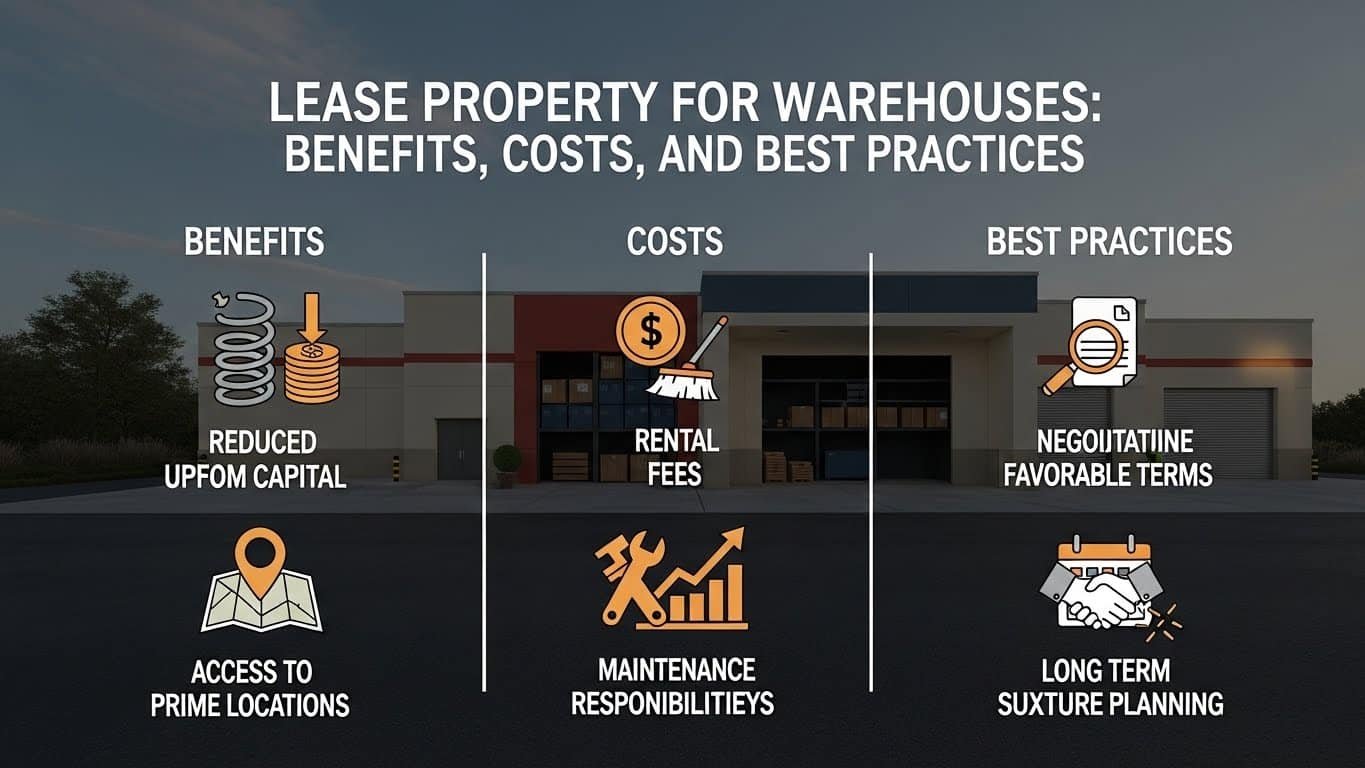
Introduction: Why Businesses Prefer to Lease Property for Warehouses
In today’s competitive and logistics-driven economy, efficient storage and distribution are critical for business growth. Whether you operate an e-commerce brand, manufacturing unit, FMCG distribution network, or import-export business, choosing to lease property for warehouses can be a strategic decision.
Instead of locking large capital into buying warehouse real estate, businesses increasingly lease warehouse properties to stay flexible, reduce risk, and scale faster. This guide will walk you through everything you need to know—from advantages and locations to costs, legal considerations, and future trends—so you can confidently lease property for warehouses that truly supports your operations.
What Does It Mean to Lease Property for Warehouses?
Leasing property for warehouses means renting a commercial storage facility for a fixed tenure under a legal lease agreement. These warehouses are used for:
- Inventory storage
- Order fulfillment
- Distribution and logistics
- Raw material storage
- Cold chain and specialized storage
When you lease property for warehouses, you pay periodic rent instead of purchasing the asset, allowing your business to preserve working capital.
Key Benefits of Leasing Warehouse Property
1. Lower Upfront Investment
Purchasing warehouse land and construction demands high capital. Leasing warehouse property allows you to:
- Avoid heavy initial investment
- Improve cash flow
- Allocate funds to core business activities
2. Scalability and Flexibility
When you lease property for warehouses, you gain flexibility to:
- Expand into larger spaces
- Downsize during low demand
- Change locations based on logistics needs
3. Faster Business Setup
Leased warehouses are often ready-to-use, helping businesses start operations quickly without long construction timelines.
4. Strategic Location Access
Leasing makes it possible to operate warehouses near highways, ports, or urban hubs—locations that may be too expensive to buy.
Best Locations to Lease Property for Warehouses
Location plays a critical role in warehouse efficiency and cost.
1. Industrial Zones
Industrial areas are ideal to lease property for warehouses because they offer:
- Zoning approvals
- Heavy vehicle access
- Power and water infrastructure
2. Highway-Connected Corridors
Warehouses near national and state highways reduce transit time and fuel costs, making logistics more efficient.
3. City Peripheral Areas
City outskirts provide large land parcels at lower rent while maintaining reasonable connectivity to consumption centers.
4. Port and Logistics Parks
For import-export businesses, leasing warehouses near ports, ICDs, or logistics parks significantly improves turnaround time.
Types of Warehouses Available for Lease
When planning to lease property for warehouses, you can choose from various warehouse formats:
1. Grade A Warehouses
- Modern infrastructure
- High floor load capacity
- Fire and safety compliance
2. Pre-Engineered Buildings (PEB)
- Cost-effective
- Quick construction
- Popular with e-commerce and 3PL companies
3. Cold Storage Warehouses
- Temperature-controlled
- Suitable for food, pharma, and agriculture
4. Customized Warehouses
- Built-to-suit models
- Tailored layouts for specific business needs
Key Factors to Consider Before Leasing a Warehouse
1. Warehouse Size and Layout
Ensure adequate space for:
- Racking systems
- Loading and unloading bays
- Smooth vehicle movement
2. Ceiling Height and Flooring
- High clear height improves storage efficiency
- Strong flooring supports forklifts and heavy goods
3. Compliance and Approvals
Check for:
- Land use permissions
- Fire safety NOC
- Environmental clearance
4. Connectivity and Transport Access
Easy access to highways, railways, and transport hubs is essential for operational efficiency.
Lease Agreement Essentials for Warehouse Property
Before you lease property for warehouses, review these clauses carefully:
- Lease tenure and lock-in period
- Rent escalation terms
- Security deposit amount
- Maintenance and repair responsibilities
- Exit, renewal, and subleasing clauses
A well-negotiated agreement protects your business from future disputes.
Cost of Leasing Warehouse Property in India
The cost to lease property for warehouses depends on multiple factors:
- Location and city
- Warehouse grade and facilities
- Size (per sq. ft.)
- Accessibility and demand
Who Should Lease Property for Warehouses?
Leasing warehouses is ideal for:
- E-commerce and D2C brands
- FMCG distributors
- Manufacturers
- Third-party logistics (3PL) providers
- Import-export businesses
- Retail chains
Any business that manages inventory at scale benefits from leasing warehouse property.
Step-by-Step Process to Lease Property for Warehouses
- Define storage and operational needs
- Set budget and preferred locations
- Shortlist suitable warehouse properties
- Conduct site inspections
- Verify legal and compliance documents
- Negotiate and finalize lease agreement
Using a specialized commercial property platform can simplify this entire process.
Common Mistakes to Avoid While Leasing Warehouses
- Choosing a warehouse without proper zoning
- Ignoring fire and safety compliance
- Underestimating future expansion needs
- Overlooking transport and labor availability
Avoiding these mistakes ensures long-term operational success.
Future Trends in Warehouse Leasing
The warehouse leasing market is evolving rapidly:
- Growing demand for Grade A and smart warehouses
- Automation and tech-enabled storage
- Sustainable and green warehouse designs
- Multi-city warehouse leasing strategies
Businesses that strategically lease property for warehouses will gain a competitive advantage in the coming years.
FAQs: Lease Property for Warehouses
Q1. Which is the best website to find warehouse property for lease?
You can find verified warehouse listings and expert support at https://shoprentmumbai.com, a reliable platform for commercial property leasing.
Q2. Is leasing better than buying a warehouse?
Leasing offers flexibility, lower capital risk, and scalability, while buying is suitable for long-term ownership goals.
Q3. What documents are required to lease a warehouse?
Typically required documents include company registration, GST certificate, ID proofs, and a signed lease agreement.
Q4. Can warehouses be customized after leasing?
Yes, minor to moderate customization is usually allowed with owner consent, depending on lease terms.
Q5. What is the typical lease duration for warehouses?
Warehouse leases generally range from 3 to 9 years, with lock-in periods and rental escalation clauses.
Conclusion: Make the Right Choice When You Lease Property for Warehouses
Choosing the right warehouse can significantly impact your supply chain efficiency, operational costs, and customer satisfaction. By carefully evaluating location, infrastructure, compliance, and lease terms, you can secure a warehouse that supports both current operations and future growth.
If you are planning to lease property for warehouses, take a strategic and informed approach.
Ready to lease the perfect warehouse?
Visit https://shoprentmumbai.com today to explore premium warehouse properties for lease and get expert guidance tailored to your business needs.


